SOS
Balancing Hope and Hopelessness

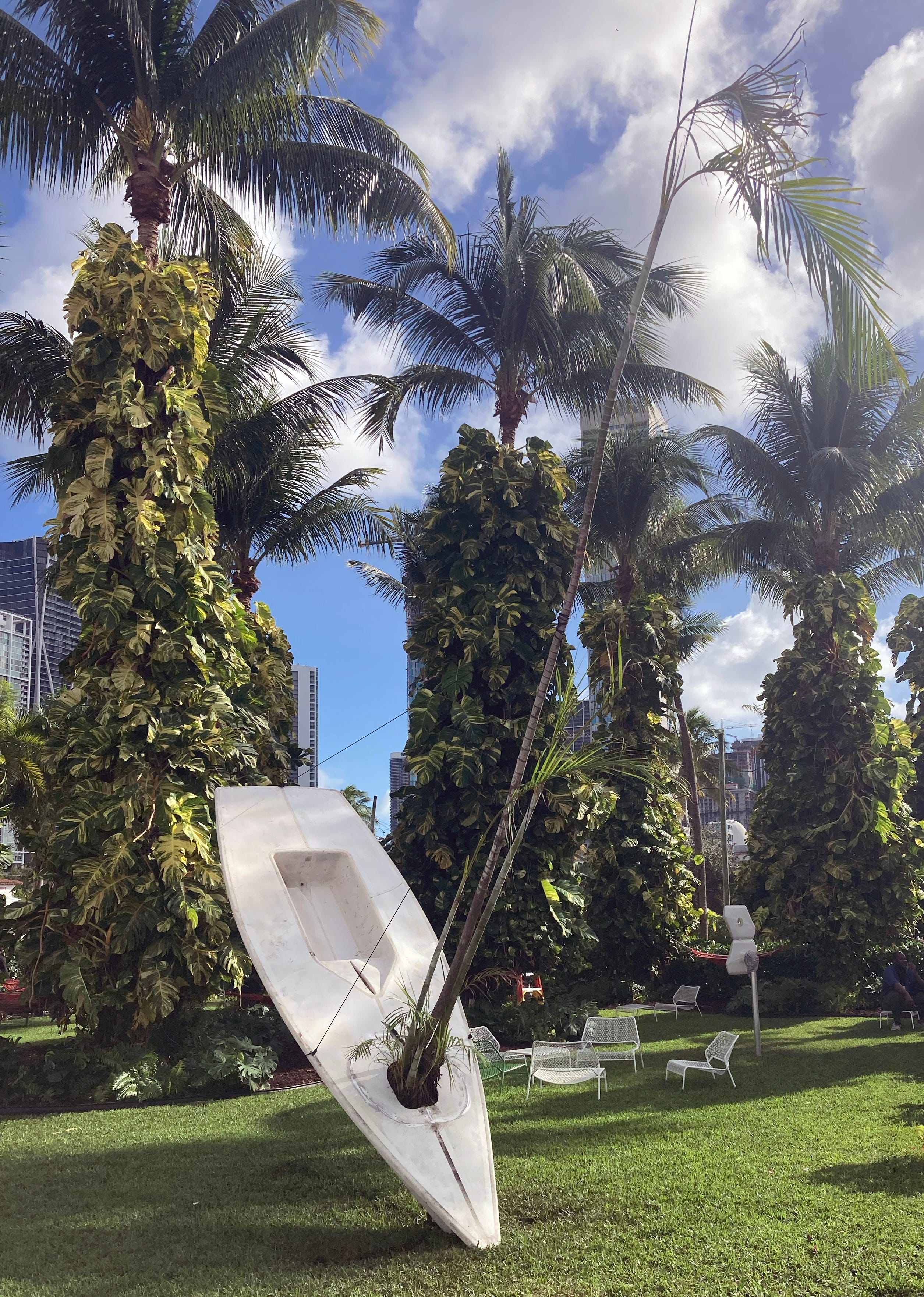
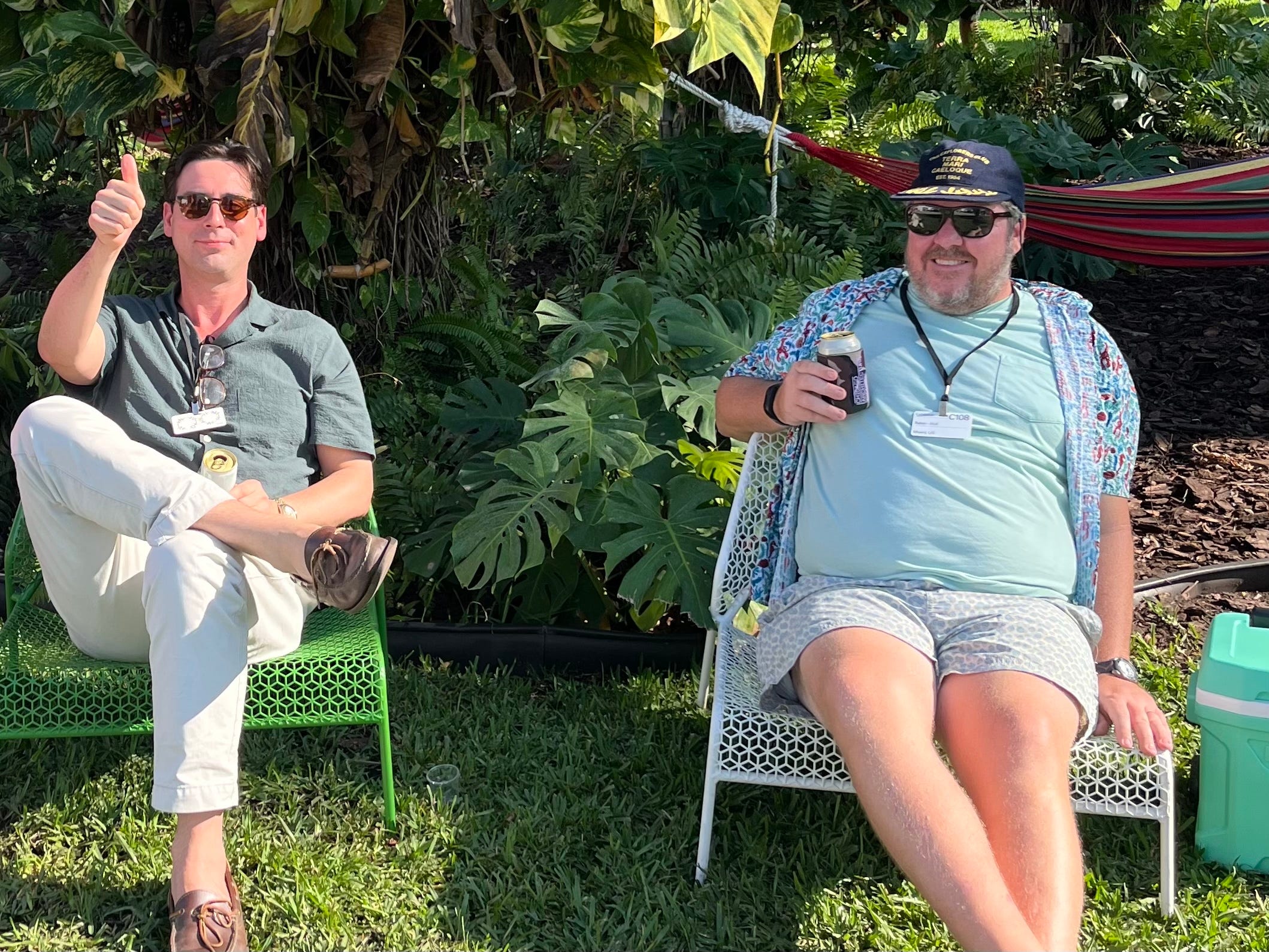
“It’s about asking for help.” Justin H. Long is pouring out rum into plastic shot glasses as we sit in a garden. It’s a scorching December afternoon in Miami. His 4-year-old daughter is chasing chickens in circles. In front of us is a Laser sailboat he’s driven snout first into the grass. Balancing it is a Solitaire Palm tree growing from its bow.
The shipwrecked sculpture, presented by Baker—Hall at NADA Miami, is the latest in a flotilla of boat-related art works and art-adjacent boat experiences I’ve been lucky enough to have with the artist.
I met Justin when I moved to Miami back in 2011. He’d returned from LA, where he studied at CalArts with Allan Sekula, to create a series of sculptures and performances that mixed California with Florida. They were funny, dangerous, aware of art history but not annoying about it. There was the Endless Column of styrofoam coolers, there was the Burden-esque Maintain Right, which turned the spring of a minivan into a giant crossbow, launching 2x4s across a gallery at the De La Cruz Collection.
There was an earlier performance at NADA—I’m shocked they invited him back—when he floated a sail boat in the Deauville pool, FUCK THE POPE spraypainted on its hull. A Hunter S. Thompson reference the hotel’s Catholic management weren’t too thrilled about.
But just as clear in my mind were the afternoons we spent out on Biscayne Bay, a cooler full of beers and cold fried chicken, with his then girlfriend, now wife, the curator Amanda Sanfilippo, and the rest of a crew of artists and art world people that happened to converge in South Florida at that point.
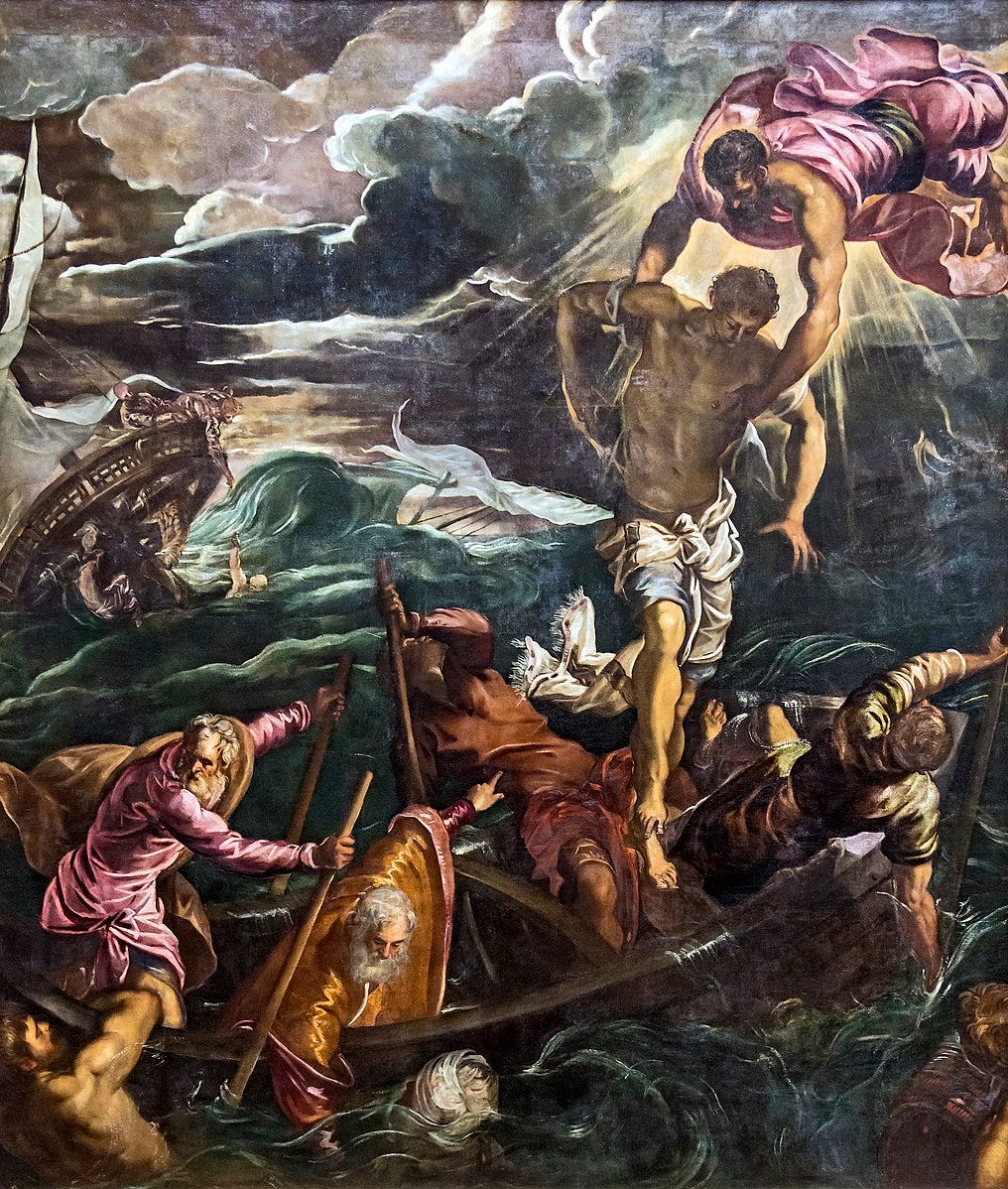
At the mention of shipwrecks in art, you might think of Géricault’s The Raft of the Medusa, at the Louvre, where the bodies are painted rotting and huddled together. Or maybe Turner’s The Slave Ship, at the MFA Boston, where outstretched limbs grasp for air. Or, most spectacularly, Tintoretto’s Saint Mark Saving a Saracen from Shipwreck, at the Accademia in Venice, where the body levitates in a state of salvation. Huddled, grasping, levitating. The canon of shipwrecks exists as a Galilean Thermometer, wherein bubbles go up, and go down.
The above paintings express the folly of empire, the wretchedness of mankind, and, simply, the miraculous. Within this triangulation of human experience, artists have found an apt symbol for our time here—a few planks of wood atop a gurgling void. But Miami, during Art Week, requires a lighter touch. Especially at the end of 2025, when we’re all treading water.
SOS, Justin tells me, is a backronym. Save Our Ship, Save Our Souls. These just came after. The letters were chosen because the Morse Code was simple and distinctive. Dot Dot Dot. Dash Dash Dash. Dot Dot Dot. I, helpfully, over rum, point out that it’s also a palindrome. “Like racecar?” (Justin comes from a long line of motorcycle racers).
And it dawns on me then—staring at this boat that has run aground, and yet is kept afloat by a growing palm, indifferent to the ruined shards of fiberglass propping it sunwards—that other things can be read back to front. Hopelessness can be read as hope. And when you ask for help, you get it.